Tanisha Pal Singh
18 April 2019
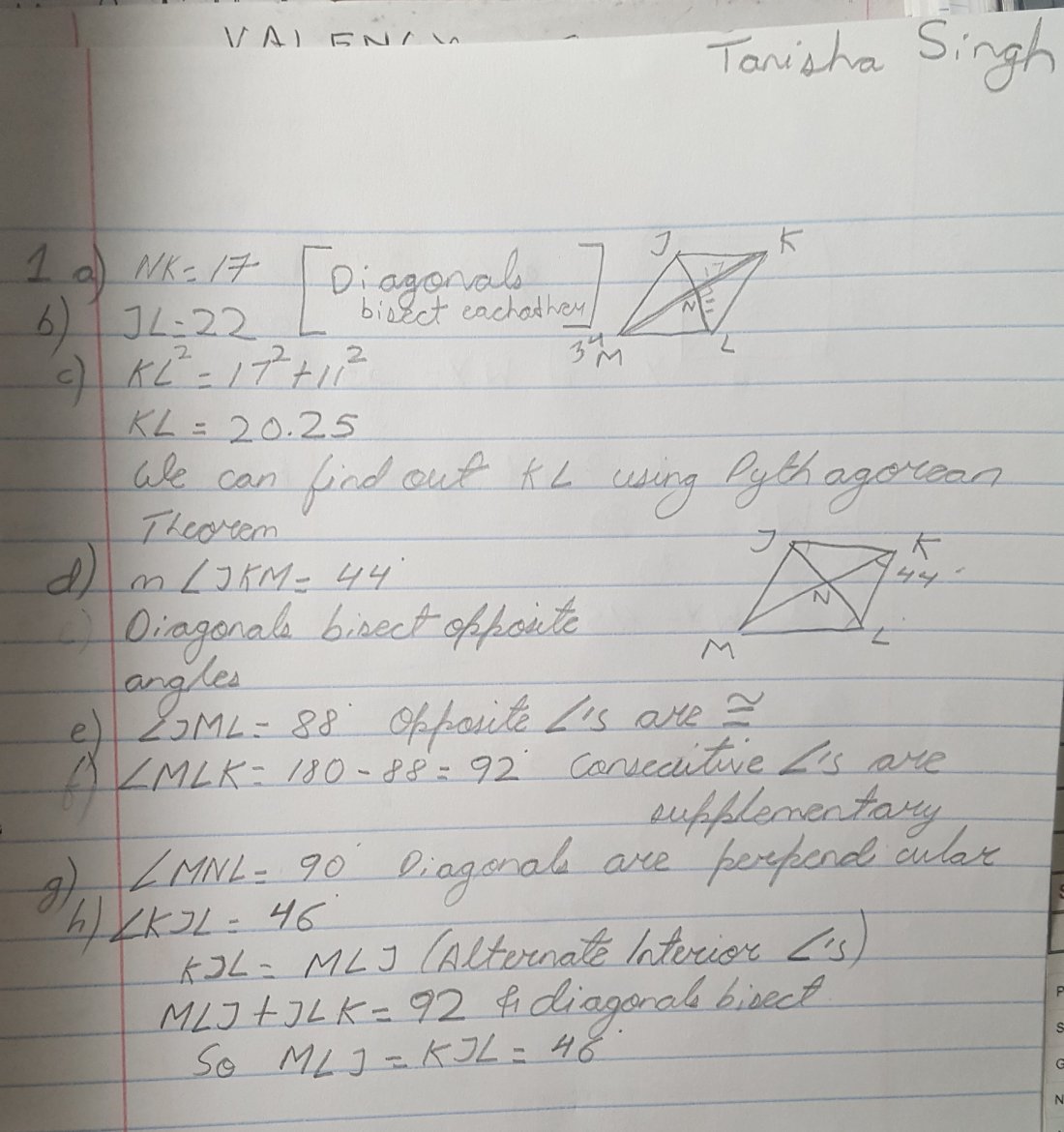
1) a) NK would be half of 34 as diagonals bisect each other. b) JL would be twice of 11 because of same reason. c) We can find out KL using Pythagorean theorem as KNL forms 90. d) JKM would be 44 as diagonals bisect angles also. e) JML would be 88 as opposite are congruent and JKL formed 88. f) We can find out MLK by subtracting 88 from 180 as consecutive angles are supplementary. g) MNL would be 90 as diagonals in rhombus are perpendicular. h) KJL would be 46 as it is equal to MLJ which is 46.
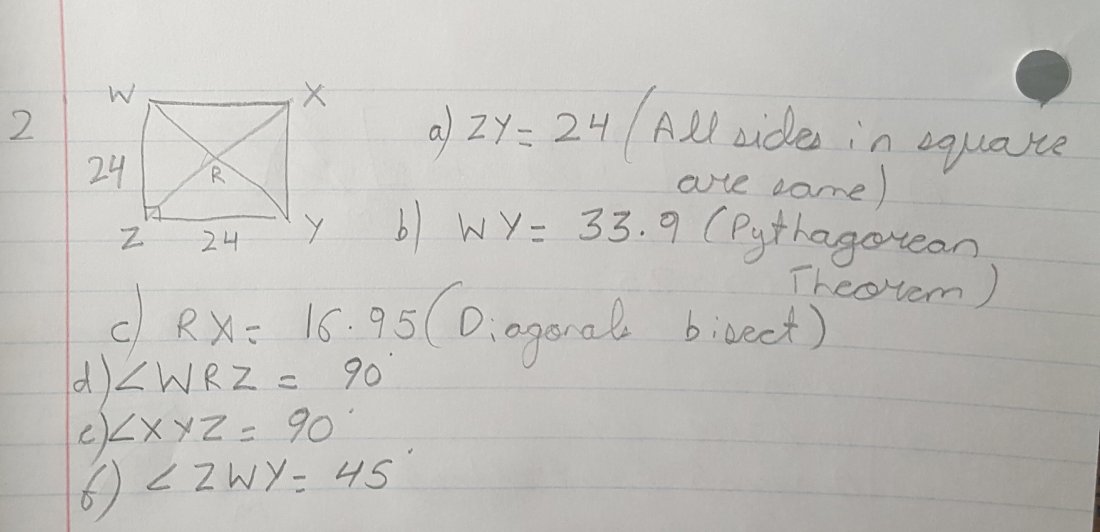
2) a) All sides are same in square and ZY is equal to WZ which is 24. b) WY is 33.9 we can find out using Pythagorean theorem. c) RX would be half of 33.9 which is 16.95 as diagonals are equal and also bisect. d) WRZ is 90 as ZWR and WZR are 45. e) XYZ is 90 as all angles of square are 90. f) ZWY is 45 as it’s angle was bisected by diagonal.
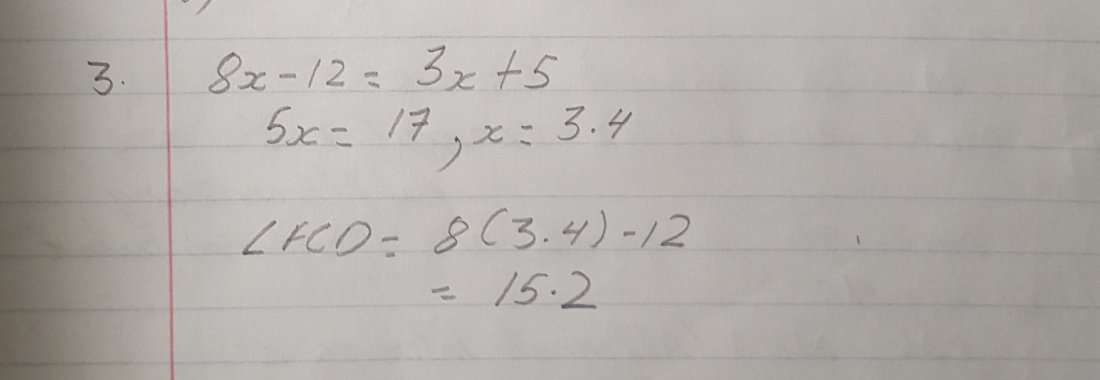
3) Two angles are congruent so we will set them equal. We will find x and plug in the value and then find FCD.

 Tanisha Singh Geometry Blog